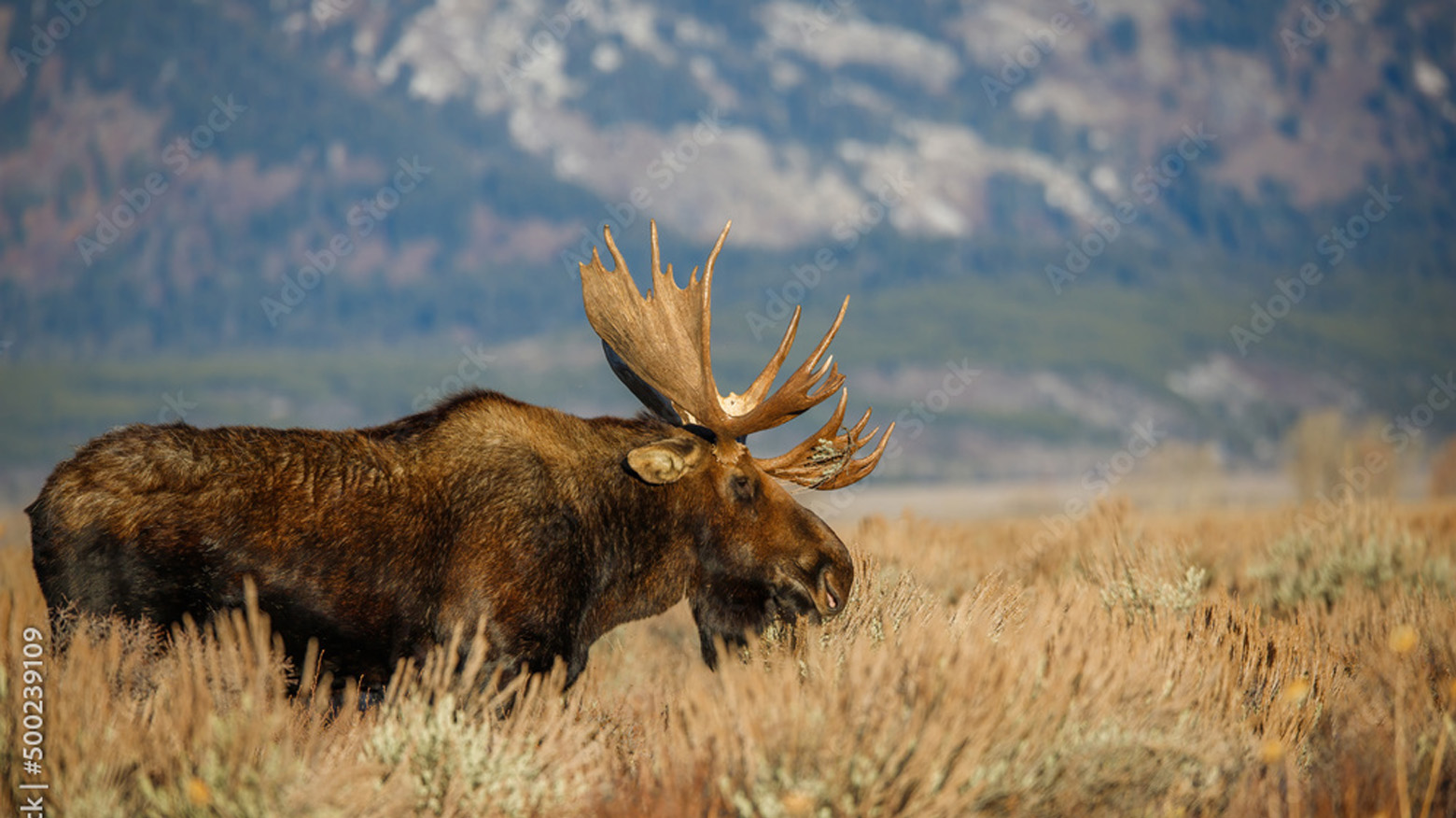
Moose
These giants don't hide for long. They're most active at dawn and dusk—give them space, especially near rivers and willow flats.
Observing Moose Safely
Create an exit
If moose feel trapped, they'll push through. Avoid blocking trails or waterways.
Body language
If a moose starts licking, stomping, and lowering its head, you're too close.
Leash your dog
Prevent your dog from chasing moose. Exit the area with your dog as quickly as possible.
Mama & calf
Never separate them. 'Nuff said.
Dealing With a Moose Charge
Get running
Don't hesitate to move. Moose aren't a standoff animal, so unlike with bears, get a move on.
Create an obstacle
Put something solid between you and the moose—a tree, a rock, or anything readily nearby.
Avoid chokepoints
Avoid narrow trails or spaces. Stick to wide open spaces only.
If you get knocked down
Curl up in a ball, with your hands behind your head.
Wild Facts
Surprising acrobats, moose can kick a full 360 degrees: forward, back, and side-to-side. Stay back and keep your head on a swivel.
Moose will wade—and even dive 20 feet underwater—to reach food along rivers and wetlands.